

Cultivated for over two thousand years, hemp—which contains CBD—has the advantage of growing quickly without requiring fertilizers or special treatments.
It is a plant variety of the Cannabaceae family, highly prized by growers for its hardiness, the size of its stem, its high CBD content, and its low THC content (THC level below 0.2%).
Although referring to the same botanical species, the term “hemp” is now preferred to designate the industrial plant and its plant fiber (CBD flowers, CBD resins, CBD oils, CBD e-liquids, CBG, and other cannabinoids, textiles, insulation, etc.), while the term “cannabis” is the name scientists use to refer to the psychoactive form, used for recreational purposes (high THC levels and, consequently, low CBD levels).
Hemp has many applications: textiles, building construction, insulation (sound and thermal), cosmetics, the production of oils, bedding, ropes, and the purchase of CBD in the form of CBD flowers, CBD resin, CBD oils, CBD e-liquids, hemp seeds, etc.
It is also widely used as fuel, in paper manufacturing, for human and animal feed, as biofuel, for medical purposes (CBD flowers and CBD resins with low THC content, CBD oils, CBD cosmetics), or for recreational use (cannabis with high THC and low CBD content).
Hemp, which contains CBD, is also highly beneficial for crop rotation as it leaves behind healthy soil with optimal characteristics.
Finally, hemp, which contains CBD, offers major environmental benefits since its production has a negative carbon footprint. That is to say, the plant absorbs more carbon than is emitted by the equipment used for its harvesting, processing, and transport.
Hemp fiber could also serve as an alternative to plastic, as it is fully biodegradable while possessing properties similar to synthetic plastic.
It is up to us to halt the disastrous climate changes that risk becoming irreversible if left unchecked. In this sense, purchasing CBD is beneficial for the climate.
Hemp, which contains CBD, CBG, and other cannabinoids such as THC, represents an environmentally friendly and economically viable alternative.
A Brief Glossary on CBD Hemp
To qualify as industrial hemp and thus be legally cultivated in Ireland, the hemp must be grown from a variety with a THC content of 0.2% or less (this is the case with the delicious CBD flowers and CBD resins from Mama Kana).
• In southern Ireland, “chènevière” or “canebière” refers to a hemp field.
• “Chènevis” refers to the hemp seed, from which Mama Kana makes its 2.5%, 5%, 10%, and 20% CBD oils.
• Chènevotte is the woody part of the stem, the inner pith that remains after the fiber has been separated.
• A ferronnier is a hemp comb maker.
• A hemp oven is an oven traditionally used to dry hemp.
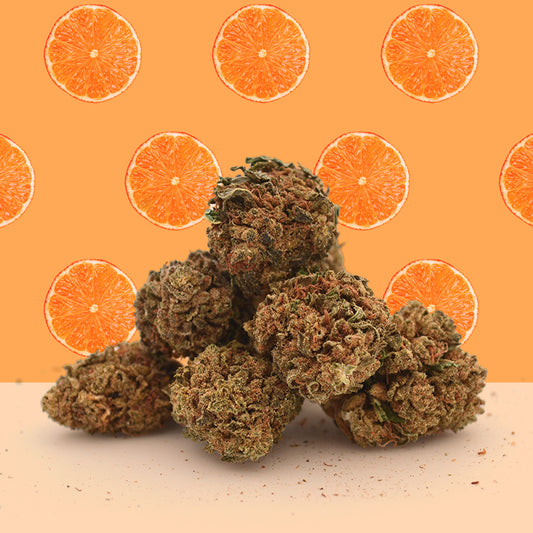
![Trim CBD 🧉 [Greenhouse] a colorful background](http://mamakana.com/cdn/shop/files/TrimCBD_1_62bc19c6-8b2f-416e-aa10-70da357ae351.jpg?v=1720017738&width=533)

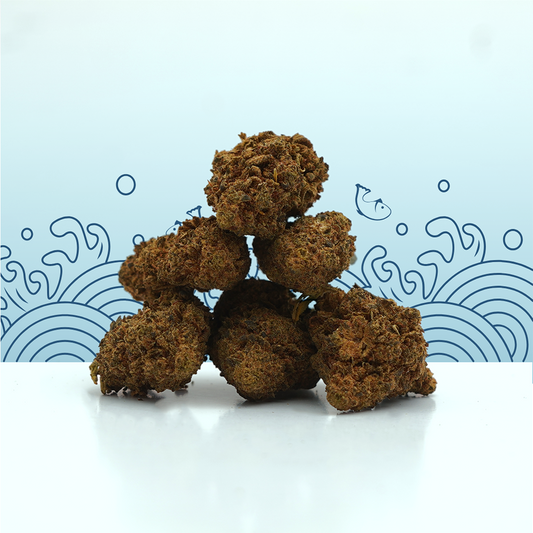
![Sour Diesel CBD ⛽ [Greenhouse] a colorful background](http://mamakana.com/cdn/shop/files/SourDiesel-fond.png?v=1750939336&width=533)


