



Pheno Hunting: How a Commercial CBD Strain Is Developed
|
|
Reading time 4 min
My Cart
0
Your basket is empty
Mom has some gifts saved for you: they'll be waiting for you when you place your first order.
Mama's Favorites
My Cart
0
|
|
Reading time 4 min
CONTENTS
Before a new strain makes its way to your CBD shop, it may be the result of several years of selective breeding. Behind a brand name often lies a long process of phenotype hunting. Let me explain the whole process to you.
Imagine that Mama crosses two hemp plants, each with interesting characteristics. Well, their offspring won’t all be identical. That’s exactly where “pheno hunting” (short for “phenotype hunting”) comes in.
A phenotype refers to the observable characteristics of a plant, resulting from the interaction between its genetic makeup and its environment.
Two plants derived from the same parents may therefore differ in terms of growth, floral structure, resin production, or chemical profile.
The recruiter's job is to identify the individuals who best meet the desired criteria.
Because a cross doesn't produce a copy of the parents. Sexual reproduction combines the genetic material of both plants. The offspring inherit different combinations of traits and can therefore exhibit a variety of characteristics (just like you, my little one).
Let’s take a simple example: one parent has a compact structure and high trichome production, while the other has a particularly sought-after terpene profile. Some offspring may combine these traits, while others may express only some of them.
The process begins with a cross between parent plants selected for specific traits. The seeds produced give rise to a population of offspring. Depending on the project and the methods used, the breeder may work with several dozen or even several hundred individuals.
The larger the population under observation, the more easily the breeder can identify differences among individuals. Phenotype hunting is therefore like looking for a needle in a haystack. The plant being sought may exist among the offspring, but it still needs to be identified!
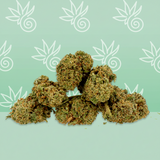
At this stage, the breeder observes the differences between individual plants. Criteria may include morphology, branch structure, inflorescence shape, CBD flower density, or the apparent quantity of trichomes.
But appearance alone isn’t enough. A plant that is particularly visually appealing may have a cannabinoid profile that doesn’t meet the specifications. Another plant, less visually striking, may have a much more interesting combination of CBD, other cannabinoids, and terpenes.
For a strain intended for the CBD market, the cannabinoid profile is obviously a key factor.
Producers can analyze the flowers to determine their CBD, CBDA, and other cannabinoid content, while also checking the THC level—which is what makes CBD legal in Ireland.
A plant with a particularly interesting profile can thus be selected even if its appearance did not immediately place it at the top of the list.
Terpenes also come into play. Myrcene, limonene, linalool, pinene, and beta-caryophyllene may be present in varying proportions from one plant to another.
For a breeder, identifying an individual with a consistent and desirable terpene profile can be just as valuable as selecting for a particular morphology.
Chromatographic analyses make it possible to go beyond olfactory observation and characterize this composition more precisely.
A commercial variety must be capable of being produced with sufficient consistency. The structure of the inflorescences, vegetative vigor, flower yield, and ease of harvesting may therefore be included among the selection criteria.
Let’s say a plant clearly stands out from the rest. It has the desired cannabinoid profile, an interesting terpene composition, a suitable morphology, and sufficiently consistent performance. The work doesn’t stop there.
We need to verify that the observed characteristics are not simply due to the specific conditions under which this plant grew.
The environment can alter the expression of a phenotype. For example, light, temperature, nutrition, substrate, and other factors can influence a plant’s growth and composition.
When an individual exhibits particularly desirable traits, vegetative propagation allows its genetic makeup to be preserved.
Cloning produces genetic copies of the selected plant. Unlike seeds produced through sexual reproduction, these copies have the same genotype as the parent plant, subject to any mutations or variations that may occur over time.
The work done in the early stages directly influences the uniformity of the flowers produced. Properly selected and propagated genetics can result in batches with more consistent characteristics in terms of morphology and composition.
A plant is still a living organism, and its environment always influences its development; however, selection based on measurable criteria allows for better control over the desired characteristics.
Article written by Benjamin Poirel-Nadal
Passionate about natural well-being and plants with multiple virtues, I've been exploring the benefits of CBD and its various forms for several years.
My aim? To share with you clear information, honest opinions and practical advice to help you integrate CBD into your daily life with confidence and serenity.


